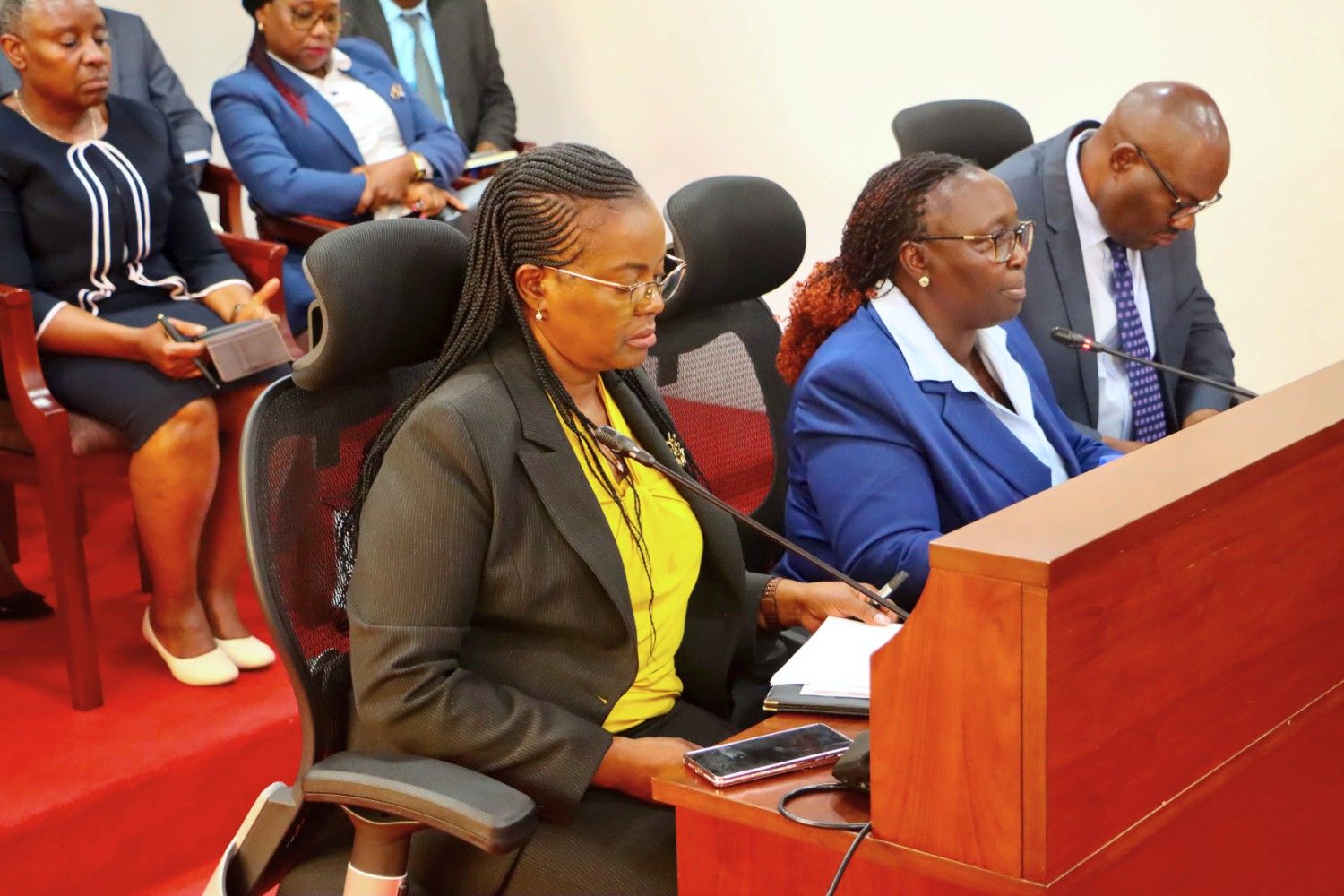
The State Department for Gender Affairs and Affirmative Action has appealed to Parliament for an additional Sh1.3 billion in the 2026/27 financial year to sustain critical gender empowerment and protection programmes across the country.
Appearing before the Alice Ng'ang'a-led National Assembly Committee on Social Protection, the Principal Secretary Anne Wang’ombe warned that the current budget ceiling will not be sufficient to support key initiatives, including the establishment of safe centres for survivors of gender-based violence (GBV) and harmful cultural practices.
“The current BPS Budget ceiling will not be adequate to support key programmes such as social-economic empowerment of women, establishment of safe centres, which is critical for safeguarding distressed/affected persons in both GBV and FGM,” she said.
According to the PS, she said that the department has been allocated a gross expenditure ceiling of Sh6.25 billion against a requirement of Sh11.95 billion, leaving a significant financing gap that could hamper implementation of planned interventions in gender mainstreaming, women empowerment and community development programmes.
Submitting the Budget Policy statement indicates that the recurrent expenditure stands at Sh2.13 billion against a requirement of Sh3.85 billion, while development allocation is Sh4.12 billion against a requirement of Sh8.10 billion.
The PS has said that in the medium term, the department plans to intensify efforts to empower women economically by improving access to affordable credit through the Women Enterprise Fund and the National Government Affirmative Action Fund.
“In the medium term, the State Department will pursue policies which are geared towards empowering women economically through capacity building and facilitating access to affordable credit and markets,” Wang’ombe stated.
Wang'ombe has told the lawmakers that the department is intending to strengthen policies and campaigns aimed at ending gender-based violence, femicide and female genital mutilation through enhanced justice systems and survivor protection mechanisms.
However, unfunded development activities amounting to Sh4.095 billion against a budgetary requirement of Sh4.6 billion have resulted in a shortfall of Sh505 million, affecting, among others, the construction of Gender Violence Protection Centres.
Additionally, unfunded recurrent activities require Sh391 million, resulting in a funding gap of Sh208 million, with priority programmes including sensitisation on gender mainstreaming and capacity building for GBV response teams likely to be impacted.
The Principal Secretary cautioned that failure to address the funding deficit could reverse gains made in promoting gender equality.
“Non-allocation may undermine gains made in GBV prevention and gender equality, expose institutions to legal and operational risks, slow progress towards Kenya Vision 2030 and SDG 5 targets and weaken enforcement of the two-thirds gender principle,” she said.
The department is now urging lawmakers to approve an additional allocation of Sh1,319.69 million to enhance the operational sustainability of affirmative action institutions, strengthen prevention and response mechanisms for GBV and harmful practices, and boost women’s economic participation.































Comments
Sign in with Google to comment, reply, and like comments.
Continue with Google